Chinese cuisine is renowned for its complex craftsmanship and unique "wok hei" (the smoky, savory flavor from high-heat stir-frying). However, how to preserve the essence of traditional flavors amid the wave of intelligence and digitalization has become a universal concern in the catering industry today. The rapid application of artificial intelligence, big data, and robotics is opening up new possibilities for the standardization and internationalization of Chinese cuisine.
At the 26th China Food Festival, Zhu Xiaoxiang, Chairman of Shanghai Zhihaowei Technology Co., Ltd. (a subsidiary of Guangdong Jiahao), accepted an exclusive interview with CCTV.com. He shared how the enterprise converts the experience of Chinese chefs into digital standards through a "trinity" flavor solution, and explores the inheritance and development of Chinese cuisine in an intelligent context by integrating hardware and human-machine collaboration.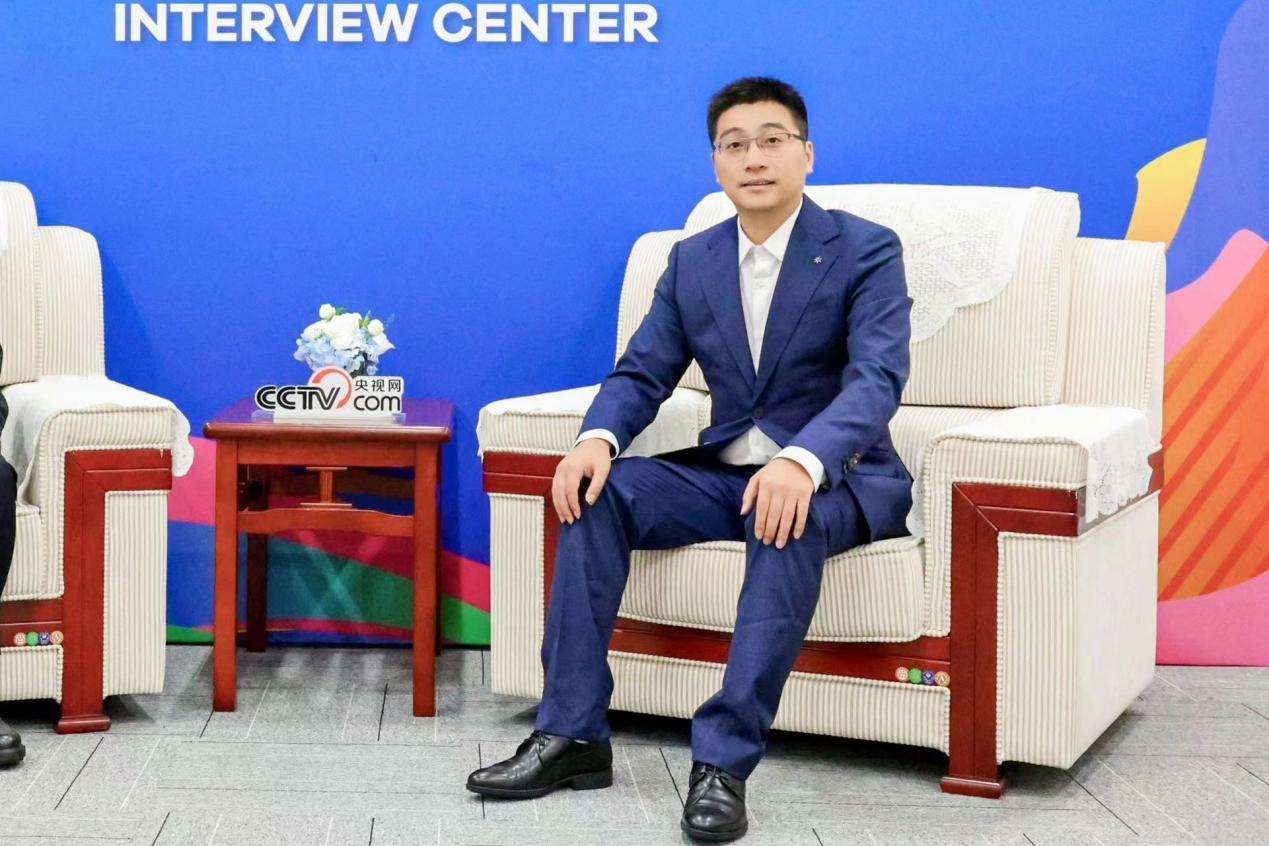
Q: Chinese cuisine is famous for its complex cooking techniques and "wok hei" flavor. With the continuous development of artificial intelligence and robotics, how do you think these traditional skills of Chinese cuisine can be better restored and inherited in intelligent scenarios?
Zhu Xiaoxiang: The "wok hei" and complex craftsmanship of Chinese cuisine are indeed its soul. We believe that intelligence is not about replacing tradition, but about accurately analyzing and restoring it through technological means. The flavor solution provided by Jingba Master Chef is a "trinity":
First, the inheritance of traditional cooking skills. Based on over 10 million catering consumption big data points and cooperation with more than 100,000 renowned restaurants and signature dishes, we accurately grasp the taste preferences of modern diners. Then, a R&D team composed of multiple flavor experts and hundreds of professional culinary consultants converts the cooking experience of veteran chefs into storable and replicable digital recipes. This turns the once "intuitively understood" experience into a "verbally expressible" scientific standard.
Second, hardware restoration of "explosive aroma and thorough flavor". Through 300°C high-temperature quick stir-frying technology and professional-grade high-density cast iron woks, we simulate the heating curve and heat distribution of traditional Chinese woks, striving to lock in the freshness of ingredients in an instant while triggering the Maillard reaction to replicate "wok hei". Our customized sauce spraying system also dispenses ingredients at the optimal time, ensuring full flavor penetration and rapid marination.
Third, the core of inheritance is "human-machine collaboration". This frees chefs from repetitive stir-frying tasks and allows them to engage in more creative work such as dish R&D, flavor innovation, and culinary culture exploration. In this way, technology becomes a new carrier for inheriting and promoting Chinese culinary skills.
Q: The catering industry is in a critical stage of digital transformation. How do you view the role of "robots + big data" in promoting the standardization and quality stability of the catering industry? What does this mean for enterprises to enhance their competitiveness?
Zhu Xiaoxiang: We believe that the "trinity of chef professionalism + big data + intelligent equipment" is the core of high-quality development in modern catering, jointly solving the problem of Chinese cuisine standardization and enhancing competitiveness:
First, chef professionalism is the cornerstone of flavor. Chefs are the soul of dishes, determining dish R&D and flavor. Jingba gathers flavor experts and culinary consultants to form a strong R&D team. We convert the implicit knowledge of veteran chefs (such as stir-frying precise to the second, ingredient dosage accurate to the gram, and complex heat control) into storable, replicable, and standardized digital recipes through repeated experiments and quantitative analysis, ensuring the science and precision of core flavors and laying the foundation for standardization.
Second, big data is a precise bridge. Big data connects chef creativity with market demand. By analyzing tens of millions of diner data points, we gain insights into regional taste preferences, popular trends, and seasonal demands, guiding professional chef teams in targeted dish R&D. This ensures that new products both inherit skills and accurately meet customer needs, improving the success rate of market launches.
Third, intelligent equipment ensures efficient execution. The core value of intelligent stir-frying robots and other equipment is to faithfully execute and reproduce digital recipes formulated by professional chefs. Through precise temperature control, standard ingredient dosage, and automated procedures, they ensure that dishes in any store at any time can highly replicate the perfect flavor designed by R&D chefs, solving the pain point of "different flavors from different chefs" and achieving consistent quality across thousands of stores.
Intelligent equipment also frees chefs from repetitive stir-frying, allowing them to focus on more creative work such as dish R&D, flavor innovation, and cultural exploration, forming a virtuous cycle of "human-machine collaboration": chefs concentrate on innovation and design, while equipment is responsible for accurate, stable, and efficient large-scale production.
In summary, the trinity model provided by Jingba Master Chef not only solves the problem of standardization but also serves as the core driving force for catering enterprises to build brand barriers, enhance competitiveness, and achieve sustainable development.
Q: In recent years, the trend of "Chinese flavors going global" has become increasingly obvious. Do you think artificial intelligence and robotics can bring new impetus to the internationalization of Chinese cuisine?
Zhu Xiaoxiang: The biggest obstacles to Chinese cuisine going global are "the lack of standardization and professional talents". An excellent Chinese chef cannot be replicated in every store around the world, but artificial intelligence and robotics provide the perfect solution:
First, solving the "talent shortage". Intelligent stir-frying robots solidify the skills of renowned chefs into the equipment, equivalent to replicating a "Chinese master chef" globally. Whether in Singapore, New York, or Sydney, local employees can operate the equipment to make authentic Mapo Tofu or Kung Pao Chicken after simple training, no longer restricted by the scarcity and high cost of Chinese chefs overseas.
Second, establishing "global standards". Technology ensures consistent flavors across global stores, safeguarding brand reputation. Just as you can taste the same Coca-Cola in any country, in the future, diners worldwide will be able to enjoy authentic "Chinese standard" flavors anywhere. This is the foundation for Chinese cuisine to go global as a cultural symbol.
Third, realizing "localized innovation". Based on big data analysis, we can gain insights into taste preferences in different overseas markets and quickly adjust digital recipes to make adaptive tweaks to dishes. While preserving the soul of Chinese cuisine, this enables better integration into the global market.
We believe that Jingba's integrated hardware and software flavor solution will become a powerful driver for Chinese cuisine's global expansion. This technology not only solves the problems of standardization and talent shortage for overseas Chinese catering but also ensures that global consumers can taste authentic Chinese flavors. Let us work together to empower food with technology, make Chinese flavors spread worldwide, and let the world fall in love with Chinese tastes!
Q: Looking to the future, do you think the application of robotics in the catering industry will not be limited to kitchen operations, but may bring new possibilities in areas such as dish R&D, supply chain collaboration, and even consumer interaction?
Zhu Xiaoxiang: As core data nodes and intelligent hubs, intelligent robots are reshaping the R&D, supply chain, and consumer interaction models of the catering industry. Their value goes far beyond "automatic stir-frying", mainly reflected in two levels of "two-way connection" and innovative empowerment:
First, two-way data connection to achieve a supply-demand closed loop. Intelligent equipment connects consumer demand with ingredient supply, enabling two-way data flow:
Demand guiding supply: By analyzing order data (sales volume, preferences, etc.), it accurately predicts ingredient demand and automatically generates purchase lists, realizing "production based on sales" and reducing waste.
Supply information directly reaching consumers: With IoT technology, traceability information such as ingredient origin and test reports can be synchronized to intelligent equipment and displayed to customers, enhancing trust and transparency.
Ultimate value: Forming a full-process visualized, efficient, and low-consumption digital ecosystem from "farm to table".
Second, innovative model upgrading to achieve an R&D closed loop. Intelligent equipment fosters an efficient iteration model of "traditional R&D + reverse R&D":
Traditional forward R&D: Chefs create new dishes based on their skills, which are digitized, produced by equipment, and launched to the market.
 EN
EN